

Language
Ban on Single-Use Plastics within Ring Road 1 from 2026: Are Residents and Businesses Ready?
According to a proposal from the Hanoi People’s Council, the city generates around 1,427 tonnes of plastic waste daily, of which over 60% consists of single-use plastics and plastic bags. Only about 20% of collected plastic waste is recycled, mainly by the informal sector (small-scale recycling facilities, household operations, and craft villages around Hanoi), and primarily PET and HDPE plastics. LDPE and other types are almost entirely discarded into landfills.
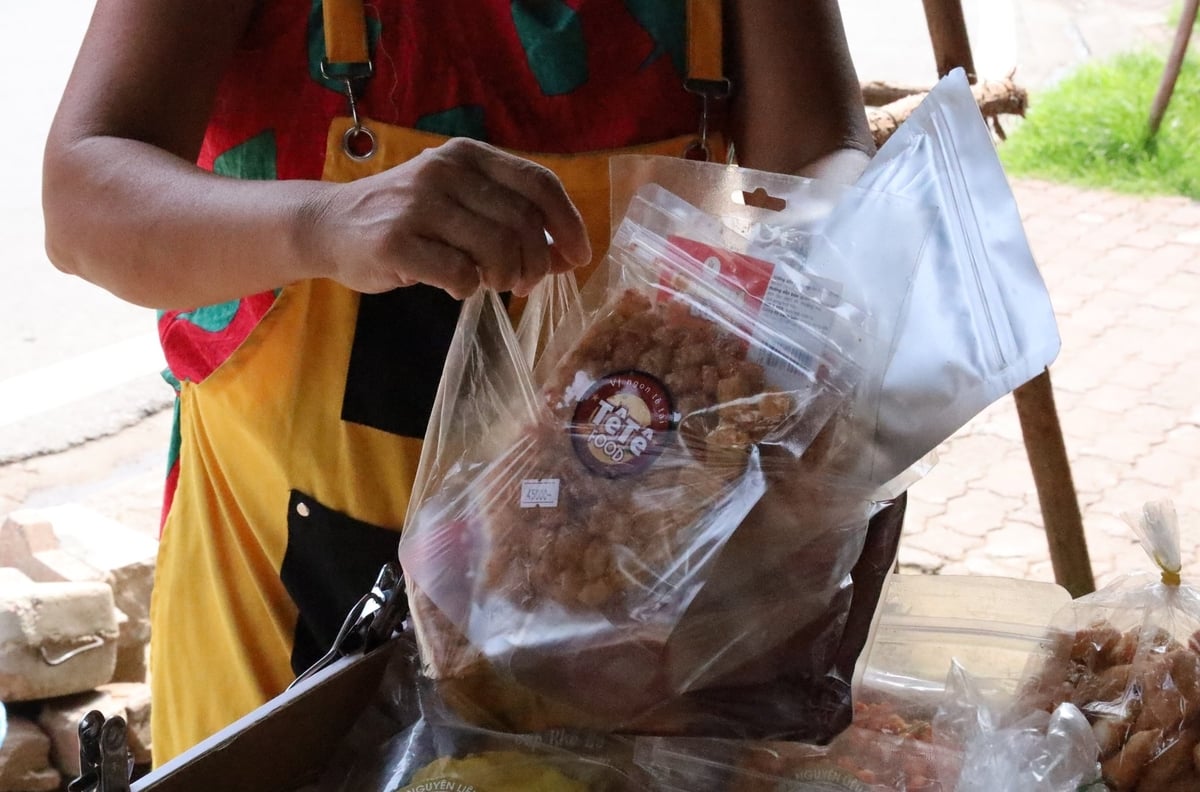
Single-use plastic bags are frequently used in daily life due to their convenience and low cost. Photo: Hoang Hien.
According to the Report on the Status of Single-Use Plastic Bag Consumption in the Supermarket Chain in Hanoi, conducted by the Institute of Strategy and Policy on Natural Resources and Environment, the number of single-use plastic bags distributed in supermarkets is extremely high. In just the 48 supermarkets surveyed, 104,000 plastic bags were given out free of charge each day, equivalent to 38 million bags per year. Most of these bags are used only once before being discarded in landfills. Plastic bags account for 38.5% of the total weight of plastic waste in Hanoi, followed by multilayer packaging at 21.4%. Together, these two types account for around 70% of the quantity and 60% of the weight of plastic waste.
Due to the negative impacts of such waste on the environment and human health, the Prime Minister has directed Hanoi to pilot a ban on single-use plastics in restaurants, hotels, beverage shops, and eateries within Ring Road 1. The pilot program will begin in the fourth quarter of this year and will be expanded in the following years.
Previously, the Hanoi People’s Council had also passed a resolution outlining measures to reduce plastic emissions in production, business, services, and daily life across the city. This is regarded as a key policy decision aimed at reducing plastic waste, protecting the urban environment, and promoting a sustainable lifestyle.
Although the Government’s and the City’s policy has received support from many businesses and consumers, concerns remain as the implementation date draws near.
For many food and beverage businesses and hotels within Hanoi’s Ring Road 1, single-use plastic items such as foam containers, plastic straws, plastic cups, and plastic bags are familiar, almost indispensable tools for daily operations. With the ban on single-use plastics set to take effect in 2026, many business owners say they agree with the policy in principle but are still uncertain about its feasibility.
Ms. Hang, the owner of a snack shop for students in Ly Thai To Ward, expressed concern as the city prepares to begin the ban at the end of this year. “Most of my customers order takeaway rather than eat in. Every time, I have to put the food in a plastic bag so they can carry it easily without dirtying their hands or clothes. I probably use nearly a hundred plastic bags a day,” she shared.
She also noted that using plastic bags has become a habit due to their convenience and lower cost compared to paper or biodegradable bags. Moreover, eco-friendly bags are still uncommon in the market, making it more difficult to source them in bulk than regular plastic bags. “Plastic bags are everywhere in the market—cheap and easy to find. But to get biodegradable bags, I have to go to the supermarket, and they are much more expensive. Using them every day would probably eat up all my profits,” Ms. Hang said.
Similarly, Mr. Sang, who runs a small beverage shop on Tran Khat Chan Street, said his store mainly offers takeaway due to limited seating. He sells hundreds of cups a day, and most of his customers are young people who are price-sensitive. “If I switch to alternatives like sugarcane pulp cups, paper cups, or rice or paper straws, my costs will go up, which could affect the shop’s revenue,” he explained.
Convenience, affordability, and availability are the main reasons why single-use plastics have become so widespread that they are now a difficult habit to break. The ban will not only affect the food and beverage sector but will also apply to accommodation establishments.
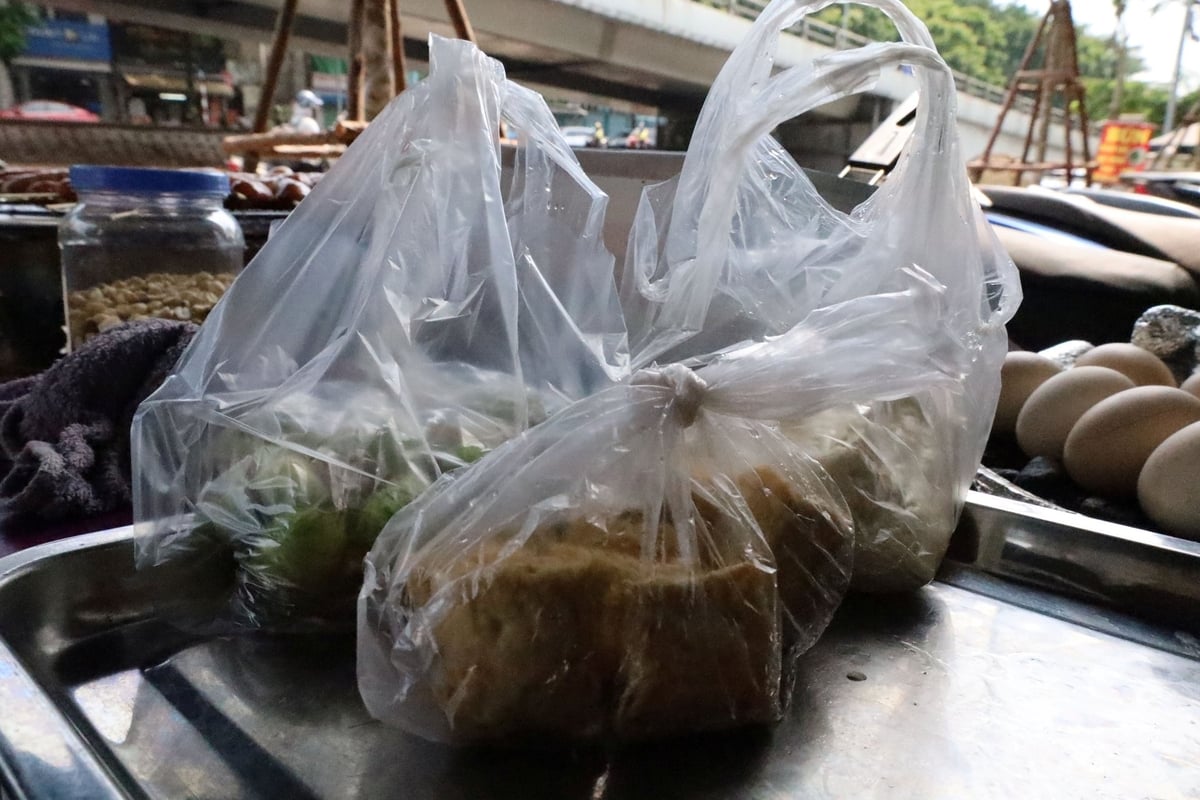
Plastic bags, though harmful, are still frequently used to store food. Photo: Hoang Hien.
Ms. Tran Thi Hanh, manager of a small hotel on Hang Bong Street, said: “We have tried switching to paper straws and fabric bags for guests. I also looked into toothbrushes made from bamboo or wheat straw, but the cost is three to four times higher, and the quality is still inconsistent.” Finding reliable suppliers and reasonably priced alternatives remains a major challenge. While there are pioneering models that have successfully transitioned, most small-scale businesses are still “struggling” to prepare as the ban approaches.
In contrast to businesses still grappling with the switch to greener, more eco-friendly products, some cafés and restaurants have successfully adopted models that reduce single-use plastics.
Ms. Yen Vy, owner of a café in Kim Ma Ward, said her shop has proactively replaced plastic products with paper cups and sugarcane pulp containers and has been sorting waste for several months. She believes the ban on single-use plastics is necessary, as it helps reduce waste and raise public awareness.
“I hope people will develop the habit of bringing their own cups when buying takeaway drinks. But to truly ban single-use plastics, I think more government support is needed,” she added.
Also among the businesses that have successfully limited plastic use, Ms. Thuy Anh, representing Nhau Studio, fully supports the policy of reducing plastic waste, especially single-use plastics. However, she noted that if a complete ban is to be implemented, a clear and synchronized roadmap is needed—covering production infrastructure, costs, and public awareness.
“It is important to ensure a stable supply of eco-friendly alternative materials and to adjust the prices of recycled products so they are affordable for all consumer groups. In reality, the cost of ‘green’ products is still higher, which affects the profit margins of many small businesses,” she said.
From a management and policy-making perspective, Assoc. Prof. Dr. Bui Thi An, former National Assembly delegate and Director of the Institute for Natural Resources, Environment, and Community Development, believes that banning single-use plastics in Hanoi at the end of 2025 is a step in the right direction, but it will only be feasible with a clear roadmap and a comprehensive support mechanism.
“Single-use plastics have severe consequences for the environment, public health, and sustainable development goals. But to ban them, there must be viable alternatives. To create alternatives, the State must take strong action,” Dr. Bui Thi An emphasized.
According to her, an urgent solution is to support businesses in developing and producing eco-friendly materials through incentives in land, capital, and technology. For the public, there should be demand-stimulating policies in the early phase, such as subsidies for biodegradable bags, plastic-for-gifts exchange programs, and promotions for using green products.
She also noted the importance of addressing livelihood transitions for workers in the plastic manufacturing industry. This must be calculated carefully to avoid disrupting workers’ lives, along with developing a detailed roadmap for each stakeholder group: businesses, the public, and local authorities.
“This will only be feasible if implementation is specific, the roadmap is clear, support policies are appropriate, and penalties are strictly enforced,” Dr. An stressed.
Source: Hoang Hien – Agriculture and Environment Newspaper

The year 2045 — marking the 100th anniversary of the founding of Vietnam — is steadily becoming a strategic symbol in the nation’s development thinking. An electric car is manufactured at a VinFast facility in Vietnam. Photo: VinFast The goal of achieving high-income status is not merely an economic target. It reflects a broader aspiration […]


Ho Chi Minh City, January 30, 2026 – Packaging Recycling Organization Vietnam (PRO Vietnam) held the Workshop “PRO Vietnam Member Communication & Connection 2026”, officially establishing the focus of action for the next phase: shifting from raising awareness to demonstrating the effective operational performance of the collection – recycling system. A 2025 survey (conducted by […]

To express gratitude for the silent contributions that help Ho Chi Minh City maintains its urban sanitation, on January 24, Tuoi Tre Newspaper and PRO Vietnam organized the event “Tet Yeu Thuong” (Loving Tet), sending Tet warmth and well wishes to waste collectors. A waste collector hard at work, collecting household waste in HCMC narrow […]

A sustainable packaging advance for direct food contact, PureNil 0, is water-soluble and can be recycled with paper or safely flushed down the drain. Image: SmartSolve. SmartSolve introduced PureNil 0, a flexible packaging material that the company reports to be the world’s first 100% bio-based and flushable substrate. The fast-dissolving, water-soluble flexible packaging material is […]

“Sustainable travel” might seem like a contradiction in terms, but it doesn’t have to be. Of course, any conference convening international experts will come with a carbon emissions impact, but before you head out, consider using these nine sustainable travel tips. From local waste bins to sustainable lodging habits, let’s look at ways we can […]


