
Language
The Packaging Recycling Organization (PRO) Vietnam reaffirmed its commitment to collaborating with the Vietnamese government on June 11 to promote a circular economy and achieve the vision of a greener, cleaner, and more beautiful Vietnam.
Held under the theme “Science and Technology – The Key to Advancing a Circular Economy”, the event reflected the spirit of a Politburo resolution on the promotion of science, technology, innovation, and national digital transformation. PRO Vietnam considers this policy a guiding framework for its future strategy, starting from 2025, to modernize its collection and recycling ecosystem and foster stronger multilateral cooperation.
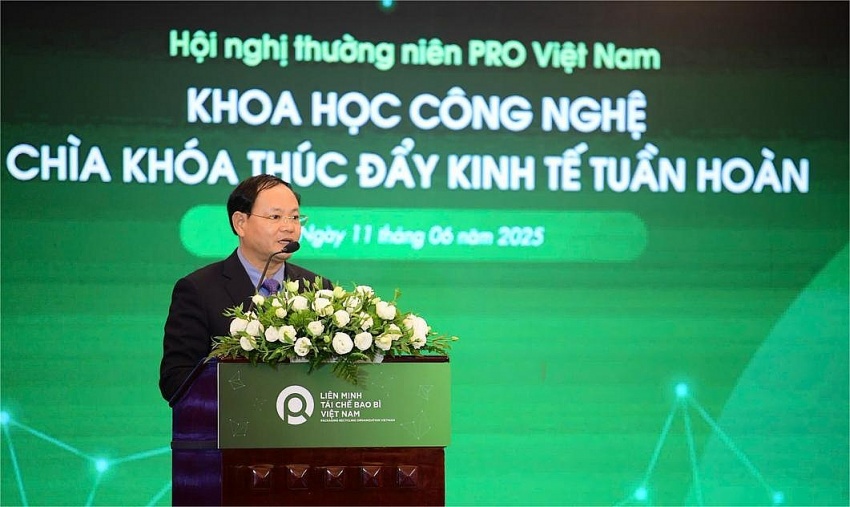
Deputy Minister of Agriculture and Environment Le Minh Ngan made a speech – Image: VIR.
Deputy Minister of Agriculture and Environment Le Minh Ngan emphasised that recent legislative reforms, including the Law on Environmental Protection, are designed to drive behavioural change at the household level. “The law requires waste to be sorted at the source and introduces a volume, or weight-based waste fee, instead of a flat rate. This encourages collection and sorting, which enhances recycling rates,” he said.
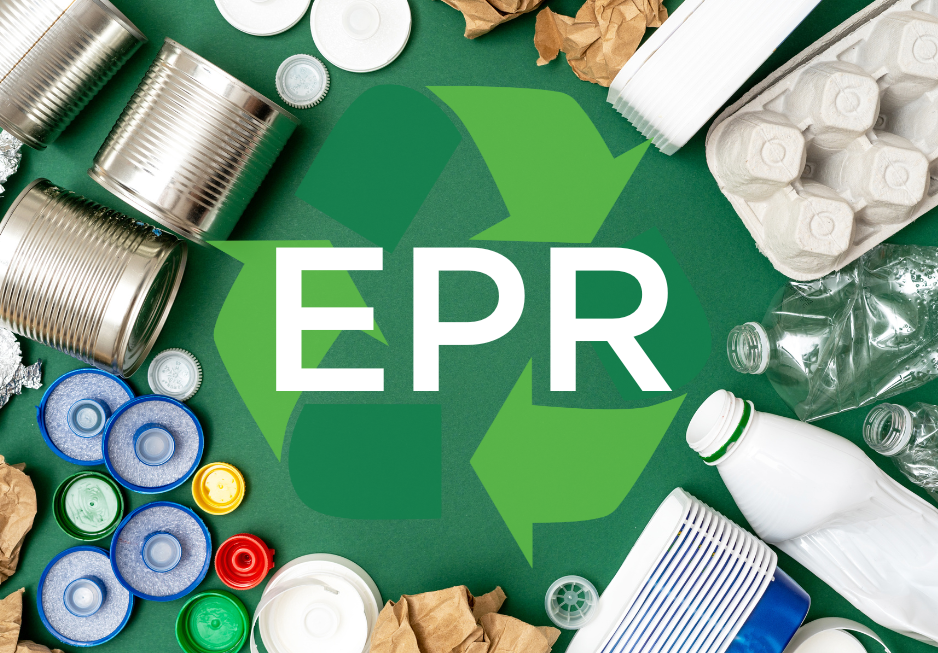
He also highlighted the implementation of Extended Producer Responsibility (EPR), whereby producers and importers of waste-generating products are obliged to take responsibility throughout the product lifecycle. This includes mandatory take-back and recycling of packaging materials such as plastics, and financial contributions to the national waste treatment system. “Our legal framework now goes beyond waste control; it promotes a paradigm shift in production and consumption towards a circular and green economy,” he stressed.
Binu Jacob, vice chairman of PRO Vietnam and general director of Nestlé Vietnam, announced that PRO Vietnam and its partners had collected and recycled over 64,000 tonnes of post-consumer packaging in 2024. The initiative covered various materials including PET bottles, UBC aluminium cans, multi-layer cartons, flexible plastics, shrink film, HDPE, and PP packaging. “These numbers reflect not just our results, but also the viability of a scalable circular economy model for the entire industry,” Jacob noted.
In addition to supporting its members in fulfilling legal EPR obligations, PRO Vietnam is working proactively to connect localities, recycling facilities, and the informal waste collection sector, recognising them as crucial contributors to Vietnam’s solid waste management system.
Among the many initiatives introduced, the “Environmental Guardians” programme stands out. Implemented in schools, supermarkets, and residential areas, it raises awareness of waste segregation and environmental stewardship among children and families. “Building positive habits in the younger generation is essential to shaping a sustainable future,” said Jacob.
PRO Vietnam is also continuing to leverage multichannel green communication campaigns and partnerships with media outlets to promote recycling awareness and producer responsibility. Its flagship campaigns, such as Green Vietnam and the Green Growth Forum co-hosted with national broadcasters, aim to expand public engagement and understanding of the circular economy.
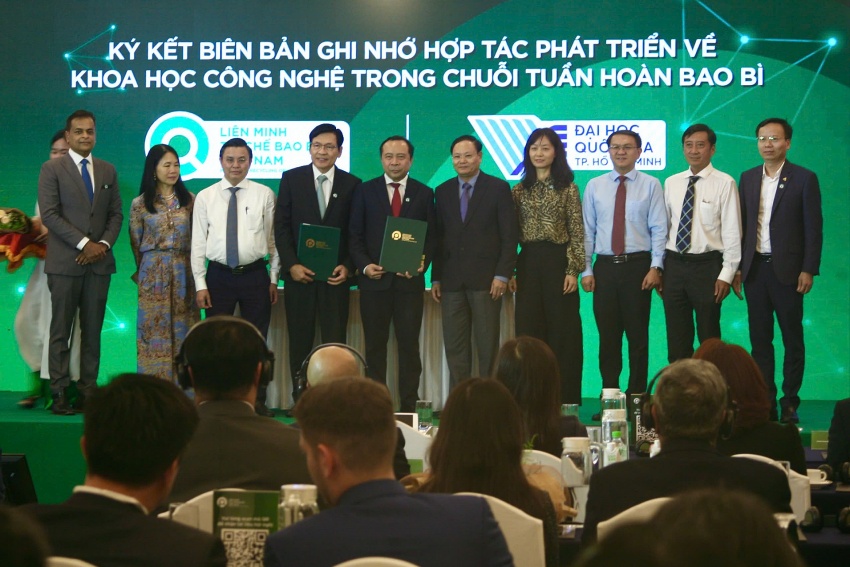
The signing of an MoU on scientific and technological cooperation in the circular packaging value chain – Image: VIR.
A notable milestone at the event was the signing of a strategic MoU between PRO Vietnam and Vietnam National University, Ho Chi Minh City. This collaboration goes beyond academic engagement, it lays the foundation for applied research, specialised training, and technology transfer to support the effective implementation of EPR and the circular packaging economy.
According to Assoc. Prof. Dr. Vu Hai Quan, director of the university, the partnership will help bridge business needs with scientific knowledge. “We aim to develop interdisciplinary training programmes that equip students with a comprehensive understanding of environmental protection, waste management, and circular operations. Through internships, community projects, and enterprise semester courses co-developed with PRO Vietnam, we want our students to gain real-world exposure,” he said.
“We also plan to launch public campaigns, green education courses, and community outreach activities together. Environmental education must extend beyond the classroom, it must become a shared responsibility throughout society,” he added.
The strategic cooperation opens new avenues for more than 30 PRO Vietnam members to access top-tier research, updated expertise, and a highly skilled workforce. This collaboration is expected to strengthen the competitiveness of participating businesses, improve their recycling models, and enable the circular value chain to operate more efficiently.
Looking ahead, PRO Vietnam outlined four strategic directions: expanding its membership base with a focus on Vietnamese enterprises; digitalising and standardising data across the waste lifecycle; implementing Resolution 57-NQ/TW with a focus on sustainable materials and smart packaging design; and building effective, material-specific collection models tied to production-consumption-recycling chains.
“We remain committed to working hand-in-hand with the government, business community, and society at large to operationalize EPR and build a sustainable circular economy in Vietnam,” said Pham Phu Ngoc Trai, chairman of PRO Vietnam.
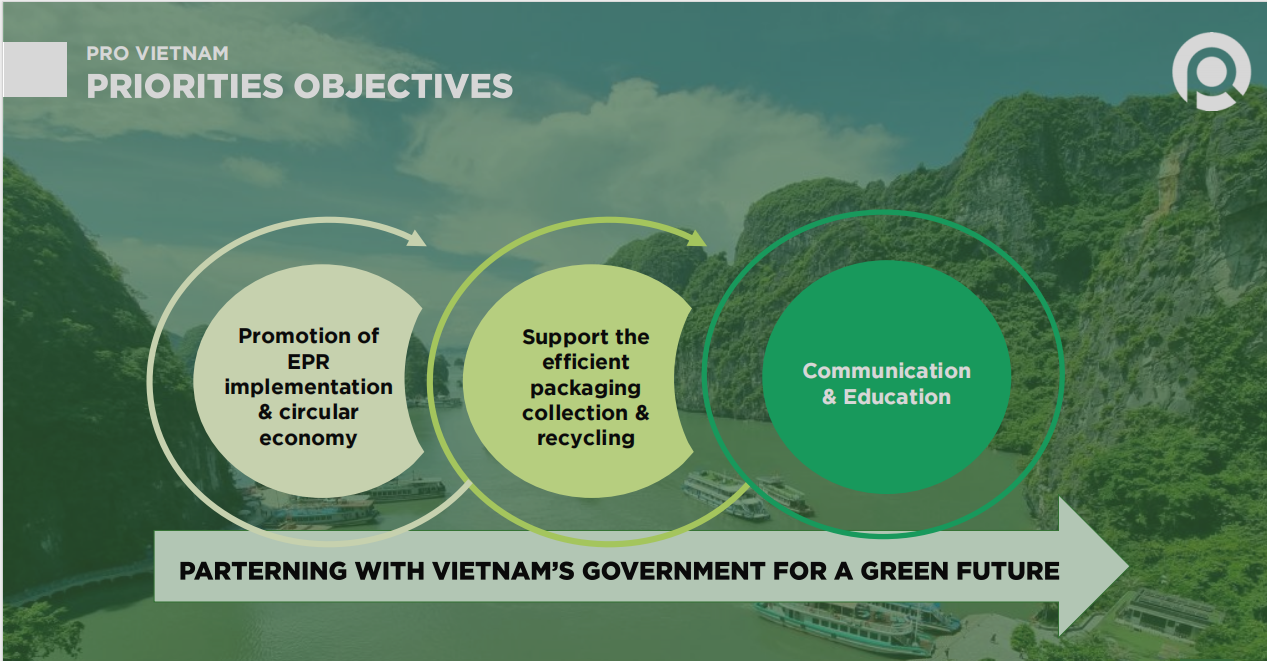
PRO Vietnam’s commitment to promoting sustainability – Image: PRO Vietnam.
As Vietnam intensifies its sustainability transition, PRO Vietnam’s integrated approach is grounded in policy, innovation, education, and community engagement that may well serve as a blueprint for how industry can lead in driving systemic change towards a circular, resilient economy.
Source: Nguyen Thu – Vietnam Investment Review.

A sustainable packaging advance for direct food contact, PureNil 0, is water-soluble and can be recycled with paper or safely flushed down the drain. Image: SmartSolve. SmartSolve introduced PureNil 0, a flexible packaging material that the company reports to be the world’s first 100% bio-based and flushable substrate. The fast-dissolving, water-soluble flexible packaging material is […]


“Sustainable travel” might seem like a contradiction in terms, but it doesn’t have to be. Of course, any conference convening international experts will come with a carbon emissions impact, but before you head out, consider using these nine sustainable travel tips. From local waste bins to sustainable lodging habits, let’s look at ways we can […]

The PepsiCo Foundation funded the project ‘New Harvest: Sustainable Agriculture Initiative’, focusing on regenerative agriculture and climate change. On the sidelines of the bilateral negotiations on Vietnam-U.S. countertrade held from November 10–14 in Washington D.C., the PepsiCo Foundation, the Vietnam Partnership for Sustainable Agriculture (PSAV), the National Agricultural Extension Center (NAEC), and CARE signed a Memorandum […]
ABSTRACT Extended Producer Responsibility (EPR) represents a critical policy instrument for enhancing waste management systems. While Vietnam has initiated a transition from a discretionary to a mandatory EPR framework, significant challenges persist in the effective monitoring and evaluation of compliance by producers and importers; therefore, this study seeks to develop strategic policy recommendations aimed at […]

Discover the latest sustainable materials revolutionizing packaging circularity and improving environmental impact. Led by the “Reduce, Reuse, Recycle” mantra, the packaging industry is always in search of new ways to do better for the environment, whether it’s through the use of reduced reliance on eco-complicated materials, an increased adoption of recycled materials, or by exploring […]

