

Language
HSBC Vietnam introduced Vietnam’s first card made from recycled Polyvinyl chloride (rPVC) plastic. Its ambition is eliminating single-use PVC plastic by the end of 2026, in favour of rPVC.
The new cards are made from 85 per cent recycled plastics originating from industrial waste. Being one of the leading card issuers in Vietnam, HSBC’s move to rPVC cards will help reduce CO2 emissions by nearly half a tonne a year, and save 0.2 tonne of plastic per year.
Collectively, HSBC Vietnam together with other markets where HSBC Group operates can help reduce CO2 emissions by 161 tonnes a year, and reduce 73 tonnes of plastic waste per year globally.
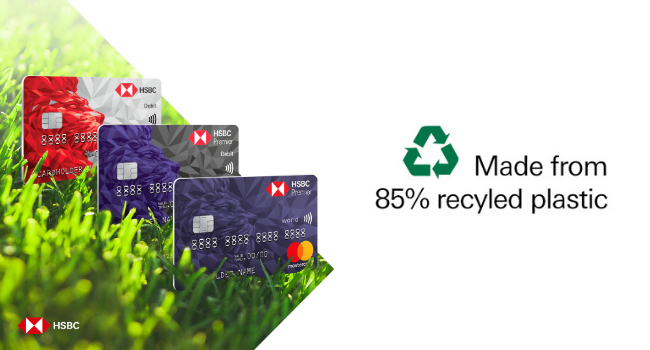
The rollout starts in January 2022 with its Premier MasterCard Credit card, Premier Debit card and Classic Debit card.
“New sustainable materials, such as rPVC, offer the financial services industry a clear way to accelerate its efforts to build a more sustainable future, and we’re proud to be part of a movement which is gathering momentum across the world. Replacing our cards will be another step as to help the bank and our customers make a positive impact on the environment”, said Pramoth Rajendran, head of wealth and personal Banking at HSBC Vietnam.
He emphasized that there is no doubt that environment is of prime importance to Vietnam. The country is too familiar with the threats from climate change. The move towards recycled cards enables HSBC and our customers to join hands together for a greener Vietnam, supporting the country’s climate action commitment at the COP26 which is reaching its net-zero carbon emission target by 2050.
This move towards recycled cards is just one amongst many initiatives that HSBC is driving globally and in Vietnam in particular.
Previously, to help retail customers reduce carbon emissions and contribute to shaping a zero-carbon future for the world, HSBC has enhanced and expanded its range of green loan products in Vietnam, offering preferential loans on green construction and rooftop solar energy, and more green lending to come in the near future.
Not only the banking industry, companies in the hotel sector also develop sustainable programes, as using environmentally friendly materials or adding renewable energy sources.
For example, Sofitel Legend Metropole Hanoi has started using the bath set of famous French luxury fashion house Balmain which is made with 100 per cent recycled materials.
The product also meets the sustainable development goals of Accor group under the Planet 21 program.
Alma Resort on Cam Ranh peninsula has set up a solar energy system with the ambition to become a resort with the largest solar project in Vietnam.
It will install more than 5,600 solar panels with a total area of 12,500m2, which is expected to meet up to half of its electricity demand and reduce nearly 73,000 tons of emissions during the next 25 years.
In addition, enterprises in retail businesses and FMCG have taken strong action in recent time to reduce plastic waste, supporting Vietnam’s climate action commitment at the COP26.
In fact, they has initiated and conducted “green living” trend for a long time to raise consumer awareness.
For example, founded in 2019, nine leading FDI and Vietnamese companies having high prestige from consumer goods, packaging, retail, and import industries, jointly established Packaging Recycling Organization Vietnam (PRO Vietnam).
It aims at making Vietnam green, clean, and beautiful by promoting a circular economic model through more accessible and sustainable packaging collection and recycling process.
Saigon Co.op, a member of PRO Vietnam, has stopped using plastic straws since April 2019 at more than 600 stores nationwide, and replaced food packaging plastic bags with fresh banana leaves.
These actions mark Saigon Co.op as the first retail chain in Vietnam not selling plastic straws, opening a new campaign to protect the environment through consumer behavior on modern retail channels.
Nestlé in Vietnam, including Nestlé Vietnam and La Vie company – other members of PRO Vietnam, announced its commitment to plastic neutrality by 2025.
It also signed an MoU with the Vietnam Environment Agency, with the aim of promoting propaganda activities, disseminating and raising awareness about environmental protection, and promoting activities on sustainable packaging management.

A sustainable packaging advance for direct food contact, PureNil 0, is water-soluble and can be recycled with paper or safely flushed down the drain. Image: SmartSolve. SmartSolve introduced PureNil 0, a flexible packaging material that the company reports to be the world’s first 100% bio-based and flushable substrate. The fast-dissolving, water-soluble flexible packaging material is […]


“Sustainable travel” might seem like a contradiction in terms, but it doesn’t have to be. Of course, any conference convening international experts will come with a carbon emissions impact, but before you head out, consider using these nine sustainable travel tips. From local waste bins to sustainable lodging habits, let’s look at ways we can […]

The PepsiCo Foundation funded the project ‘New Harvest: Sustainable Agriculture Initiative’, focusing on regenerative agriculture and climate change. On the sidelines of the bilateral negotiations on Vietnam-U.S. countertrade held from November 10–14 in Washington D.C., the PepsiCo Foundation, the Vietnam Partnership for Sustainable Agriculture (PSAV), the National Agricultural Extension Center (NAEC), and CARE signed a Memorandum […]
ABSTRACT Extended Producer Responsibility (EPR) represents a critical policy instrument for enhancing waste management systems. While Vietnam has initiated a transition from a discretionary to a mandatory EPR framework, significant challenges persist in the effective monitoring and evaluation of compliance by producers and importers; therefore, this study seeks to develop strategic policy recommendations aimed at […]

Discover the latest sustainable materials revolutionizing packaging circularity and improving environmental impact. Led by the “Reduce, Reuse, Recycle” mantra, the packaging industry is always in search of new ways to do better for the environment, whether it’s through the use of reduced reliance on eco-complicated materials, an increased adoption of recycled materials, or by exploring […]

