

Language
Without waiting for Hanoi to pilot its ban on single-use plastics within Ring Road 1, many eateries have already proactively shifted to green business models.
Even before the city enforces the ban, many restaurants and cafés in Hanoi have begun using sustainable materials to replace single-use plastic products. Amid the fast-paced urban lifestyle—where convenience and speed are often prioritized—these “plastic-free” spaces offer a positive sign as Hanoi prepares to launch a pilot program in October this year to completely ban single-use plastic products within Ring Road 1.
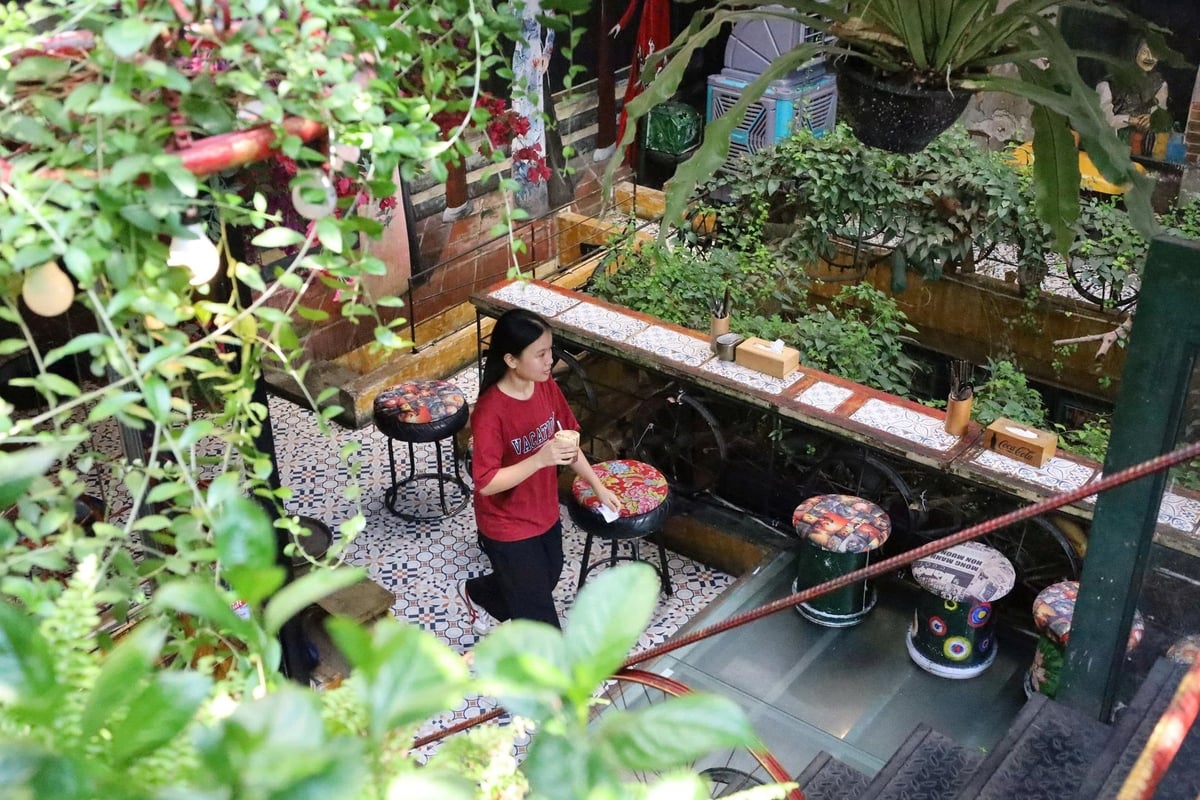
Many cafés in Hanoi have proactively reduced their use of single-use plastics. Photo: Hoang Hien.
Hidden Gem Coffee—a modest café tucked away in a small alley on Hang Tre Street—surprises visitors with its unique space, where all the furnishings are made from recycled waste.
Spread across four floors, each about 80 m², the café is designed to optimize natural light and airflow through a large skylight, helping to save electricity. Hidden Gem Coffee offers guests a relaxing atmosphere that feels close to nature.
Nearly 95% of the items in the café—from tables and chairs to decorative lights and bookshelves—are repurposed by owner Nguyen Van Tho. For Tho, waste is not something to be discarded but an endless source of creative materials. “For me, nothing is impossible to recycle,” he shared.
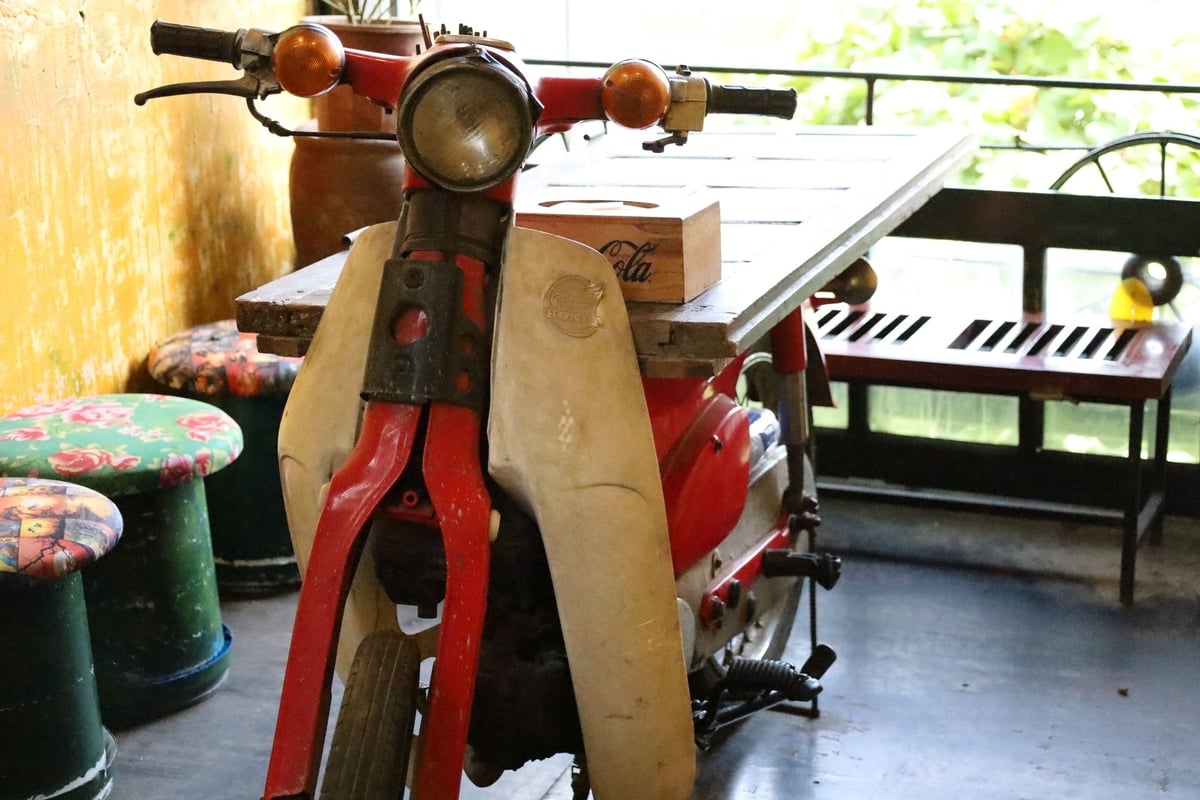
An old motorbike has been repurposed by the owner as a dining table. Photo: Hoang Hien.
Sharing the café’s inspiration, Tho said the idea for this unique space came from his childhood experiences in the countryside—where pollution and illnesses caused by waste left a deep impression on him. During the construction process, he faced many comments that what he was doing was strange or even “crazy,” but those very remarks became a strong motivation that pushed him to complete his “project.”
“Waste is not always waste if we know how to recycle, reuse, and repurpose it. It can become works of art, useful household items, or unique and beautiful decorations,” Tho said.
Beyond using alternatives to single-use plastics, the café’s operations strictly follow the principle of “reduce – reuse – recycle.” Notably, small initiatives—such as buying back customers’ plastic bottles, offering discounts for bringing personal cups for takeaway orders—are maintained to encourage patrons to limit the use of disposable items.
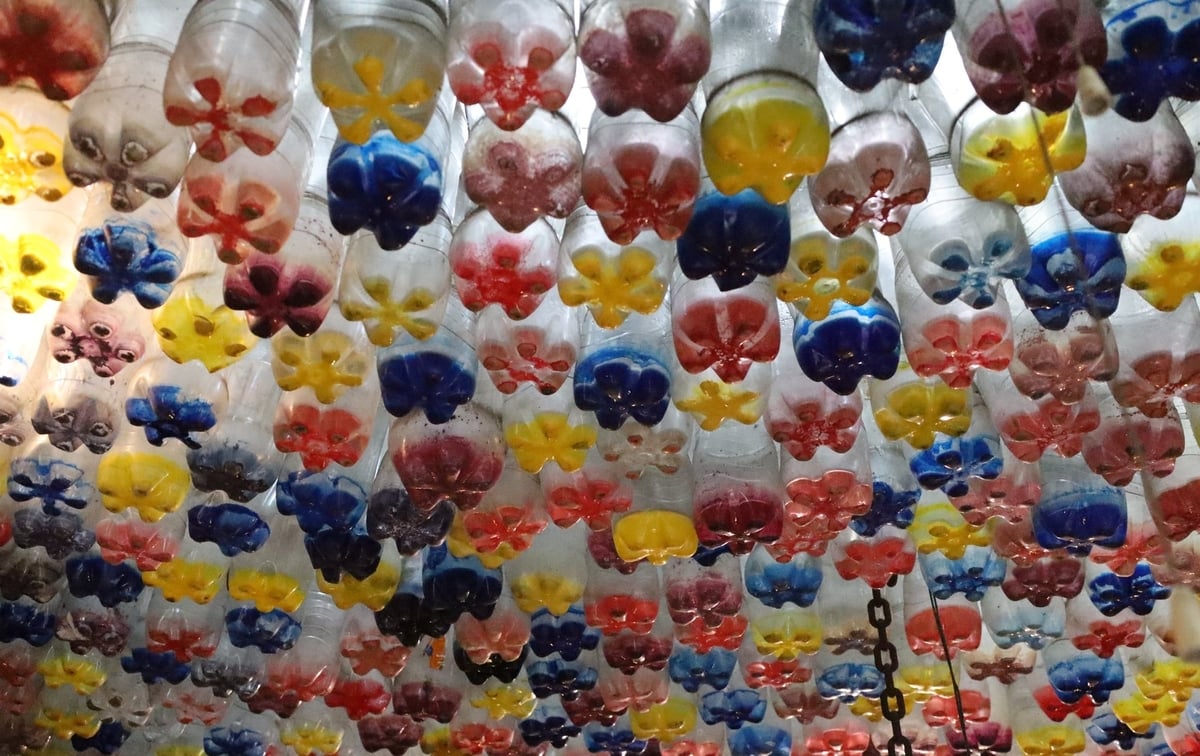
A section of the ceiling is decorated with used single-use plastic bottles. Photo: Hoang Hien.
At Hidden Gem Coffee, “waste reduction” is not just a slogan but a way of life practiced daily. “We don’t need to wait for the city’s directive—we have been, are, and will continue to maintain a lifestyle without single-use plastics, living greener in every action,” Tho affirmed.
Hidden Gem Coffee is not alone—many cafés, shops, and supermarkets in Hanoi have already gone green by reducing single-use plastic consumption.
One example is Le Petit Café, another “green” café on Kim Ma Street, which impresses visitors with its cozy space filled with lush greenery. The café’s consistent use of green tones in both its décor and social media posts creates a sense of relaxation and closeness to nature.
The café stands out not only for its ambience but also for its efforts to cut down on plastics in its operations. It uses paper straws, glass cups, and fabric bags instead of single-use plastic items, and encourages customers to bring their own bottles for takeaway orders.
“I hope that when people come to the café, they will become more aware of protecting the environment, and the ‘green living’ message will spread to the community. I believe that if millions of people make the change together, it will create a real difference,” said Vy, owner of Le Petit Café.
Like Le Petit Café, other venues such as Hoa Xa Café, Nhau Studio, HANOI 1930 Bistro, and Union Pizza have also been replacing single-use plastic products with greener, more sustainable alternatives.
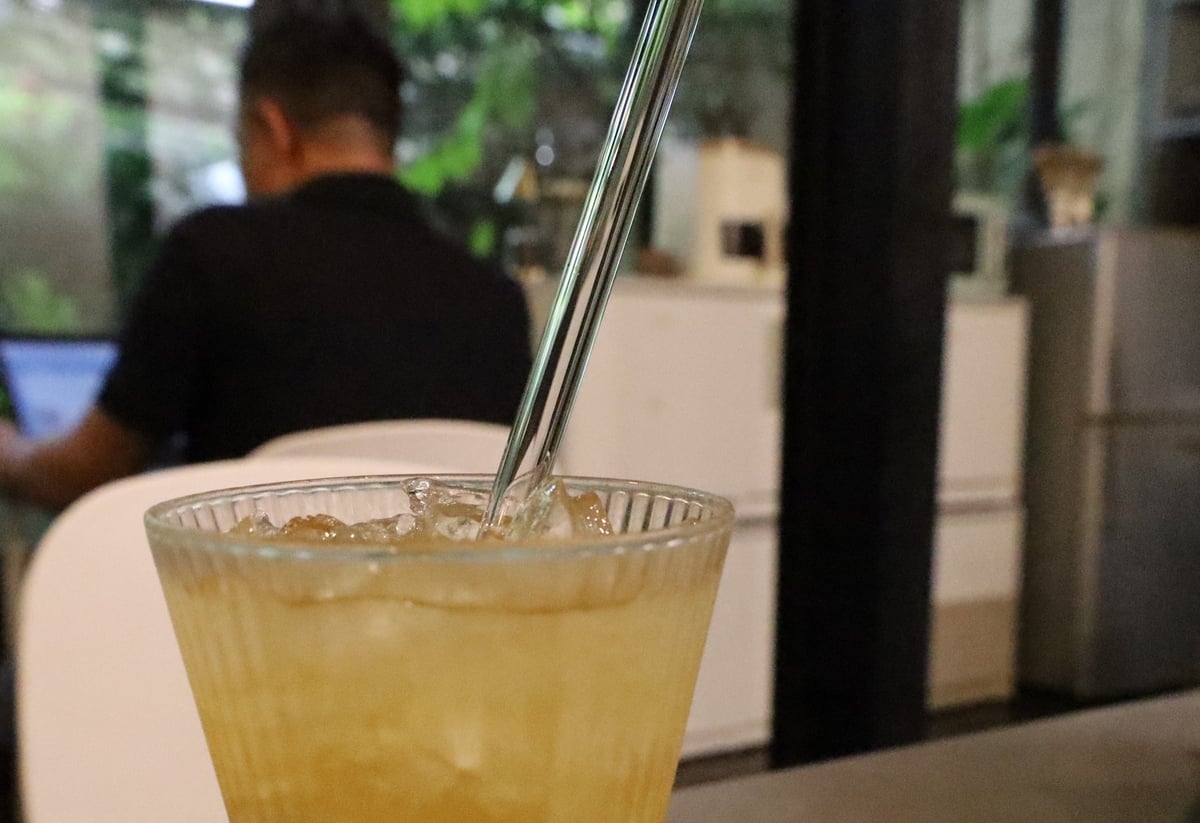
Many cafés and restaurants have switched to using glass straws, rice straws, and other alternatives instead of single-use plastic straws. Photo: Hoang Hien.
Beyond the food and beverage sector, many supermarket chains and retail stores have also launched programs encouraging customers to bring their own shopping bags. Since June 2022, AEON has implemented the “Rent-a-Bag” initiative, allowing customers to borrow one to three eco-friendly fabric bags with a deposit of only 5,000 VND per bag, refunded upon return during their next shopping trip. The chain has also set up priority checkouts for customers who refuse single-use plastic bags, offers reward points or deducts the bag cost from the bill, and gives away eco-bags for purchases over 300,000 VND. Notably, the first Monday of every month is designated as “No Plastic Bag Day” to help foster green shopping habits. By the end of June 2024, AEON’s initiative had led more than 5 million customer visits to refuse plastic bags.
In support of “No Plastic Bag Day,” since 2024, the Big C Thang Long and GO! supermarket systems have regularly held the event. Customers bringing their own bags receive a free GO! eco-friendly fabric bag and other promotional gifts. Additionally, the chain uses cardboard boxes instead of plastic bags for take-home orders and wraps vegetables in banana leaves instead of plastic packaging.
These examples show that, regardless of scale—from small cafés to upscale restaurants—businesses in Hanoi are striving to transition toward reduced plastic use and greener living. This is a positive step, especially as the city prepares to pilot a ban on single-use plastics within Ring Road 1, marking the beginning of a roadmap toward a “Plastic-Free Capital” by 2031.
Source: Hoang Hien – Agriculture and Environment Newspaper.

A sustainable packaging advance for direct food contact, PureNil 0, is water-soluble and can be recycled with paper or safely flushed down the drain. Image: SmartSolve. SmartSolve introduced PureNil 0, a flexible packaging material that the company reports to be the world’s first 100% bio-based and flushable substrate. The fast-dissolving, water-soluble flexible packaging material is […]


“Sustainable travel” might seem like a contradiction in terms, but it doesn’t have to be. Of course, any conference convening international experts will come with a carbon emissions impact, but before you head out, consider using these nine sustainable travel tips. From local waste bins to sustainable lodging habits, let’s look at ways we can […]

The PepsiCo Foundation funded the project ‘New Harvest: Sustainable Agriculture Initiative’, focusing on regenerative agriculture and climate change. On the sidelines of the bilateral negotiations on Vietnam-U.S. countertrade held from November 10–14 in Washington D.C., the PepsiCo Foundation, the Vietnam Partnership for Sustainable Agriculture (PSAV), the National Agricultural Extension Center (NAEC), and CARE signed a Memorandum […]
ABSTRACT Extended Producer Responsibility (EPR) represents a critical policy instrument for enhancing waste management systems. While Vietnam has initiated a transition from a discretionary to a mandatory EPR framework, significant challenges persist in the effective monitoring and evaluation of compliance by producers and importers; therefore, this study seeks to develop strategic policy recommendations aimed at […]

Discover the latest sustainable materials revolutionizing packaging circularity and improving environmental impact. Led by the “Reduce, Reuse, Recycle” mantra, the packaging industry is always in search of new ways to do better for the environment, whether it’s through the use of reduced reliance on eco-complicated materials, an increased adoption of recycled materials, or by exploring […]


